






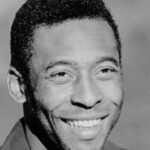


Seventy years ago on 7 September 1956, a 15-year-old substitute came off the bench in an Independence Day friendly in Santo André and scored the goal that began one of football’s most extraordinary careers. Brazilian media including G1 and Folha de S.Paulo, along with Santos FC itself, are marking the anniversary as one of the most significant single moments in Brazilian football history.
The Match, the Goal, and the Boy on the Bench
Santos FC travelled to the Vila Alzira neighbourhood of Santo André to face Corinthians de Santo André in a commemorative friendly tied to Brazil’s Independence Day celebrations. The match was played at Estádio Américo Guazzelli — a stadium that no longer exists — and Santos won 7–1.
Pelé (Edson Arantes do Nascimento) started on the bench and entered the second half as a substitute for forward Del Vecchio. Left-winger Tite delivered a cross from the byline; Pelé controlled and finished to make it 6–1 — the sixth Santos goal of the afternoon.

Santos FC historical records place the goal somewhere in the mid-to-late second half. Different club accounts cite 34 or 37 minutes of the second period, and the precise minute has not been firmly settled across sources. What is not disputed is the goal’s identity: contemporary and retrospective accounts unanimously treat it as the first of Pelé’s professional career and the first entry in his entire Santos scoring record.
Folha de S.Paulo noted a detail that captures the distance between the ordinary and the historic that afternoon: before the match, the teenager had been sent on an errand to buy cigarettes in Vila Alzira, not far from the ground where he was about to make history.
You may also Like

From Bauru to Santo André — How a 15-Year-Old Reached a Senior Debut
Pelé had grown up in Bauru, São Paulo, playing street football and junior amateur sides. His father, João Ramos do Nascimento, known as Dondinho, was a former professional footballer whose own experiences helped shape Pelé’s earliest development and love for the game.
Former Brazil international Waldemar de Brito brought Pelé to Santos, reportedly telling club officials the boy could become better than him. Pelé impressed in youth and training matches — scoring four goals in one practice game — and was integrated into Santos’ under-16 setup, still registered as an amateur.
In September 1956, Pelé had not yet signed a professional contract with Santos. The decision to include him on the bench for a senior friendly against another club’s first team reflected a significant degree of confidence from the club’s coaching staff. Although the match was a friendly rather than a competitive fixture, Santos FC and Brazilian football historians treat it as his professional debut because it was a senior club match against outside opposition.
An Independence Day Goal and What Came After
The symbolism of Pelé scoring his first professional goal on Brazil’s Independence Day, 7 September, has not been lost on those covering the anniversary. Several outlets frame it as a double independence: the nation’s and, in retrospect, the arrival of its greatest football icon on the senior stage.
Within months, Pelé became a regular in Santos’ first team. Within years, he had won state and national titles and made his debut for the Brazil national team. By the time his career ended, he had accumulated a career goal total that different credible sources record as 1,281, 1,282, or 1,283, depending on which matches are counted. Commentator Juca Kfouri, writing for UOL on the 70th anniversary, noted that whichever total one accepts, all of them begin with the same goal: the sixth in a 7–1 friendly in Santo André on 7 September 1956.
The Estádio Américo Guazzelli, where it happened, has since been demolished. The site where Pelé scored his first professional goal survives only in records, archives, and the anniversary coverage that returns to it each September.